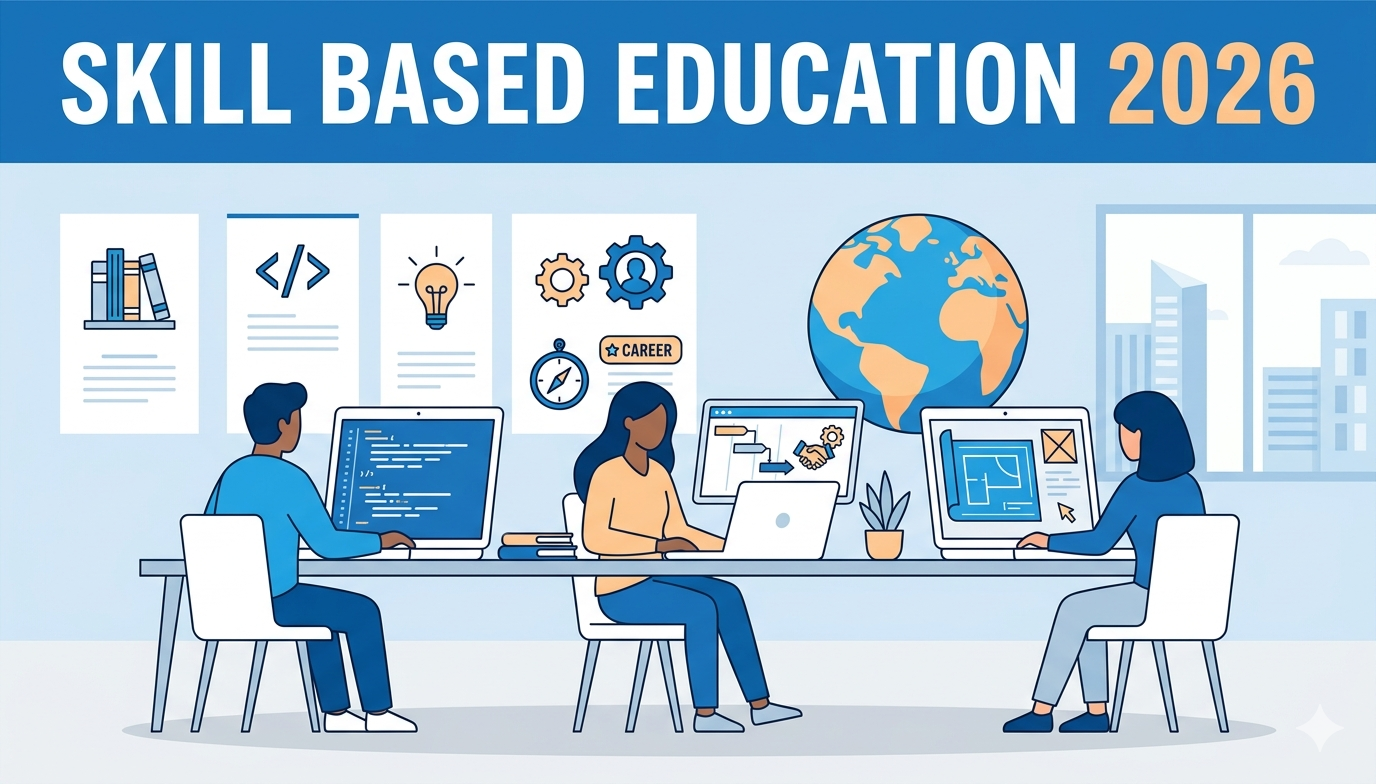
Future of Skill-Based Education in 2026: Learning for Real Careers
Education systems around the world are shifting toward skill-based learning. In 2026, the focus is no longer only on academic grades but on practical abilities that prepare students for real jobs and careers.
1. Shift from Theory to Practical Learning
Traditional education often focused on memorization. Now, institutions are prioritizing hands-on learning experiences.
Key Changes:
- More project-based assignments
- Real-world simulations
- Industry-focused training
- Practical assessments instead of only exams
This helps students understand how knowledge is applied in real situations.
2. Job-Oriented Skill Development
Employers now prefer candidates with practical skills. Education systems are adapting to meet this demand.
Important Career Skills:
- Communication skills
- Technical expertise
- Problem-solving ability
- Team collaboration
- Digital literacy
These skills improve employability in competitive job markets.
3. Rise of Vocational Training Programs
Vocational education is gaining popularity as students explore career-specific training programs.
Examples Include:
- IT and software development
- Graphic designing
- Electrical and mechanical training
- Digital marketing
- Healthcare support training
These programs prepare students directly for employment.
4. Integration of Technology in Skill Learning
Technology plays a major role in modern education systems.
Tools Used:
- Virtual simulations
- AI-based learning platforms
- Online skill certification programs
- Interactive learning apps
This makes learning more engaging and effective.
5. Industry Collaboration with Education
Many companies now collaborate with schools and universities to design courses that match industry needs.
Benefits:
- Better job placements
- Updated curriculum
- Real industry experience
- Internship opportunities
Conclusion
Skill-based education in 2026 is transforming the way students prepare for their future careers. By focusing on practical skills, real-world training, and industry collaboration, education systems are becoming more effective and job-oriented.
Students who embrace skill-based learning will have better opportunities in the modern job market.